
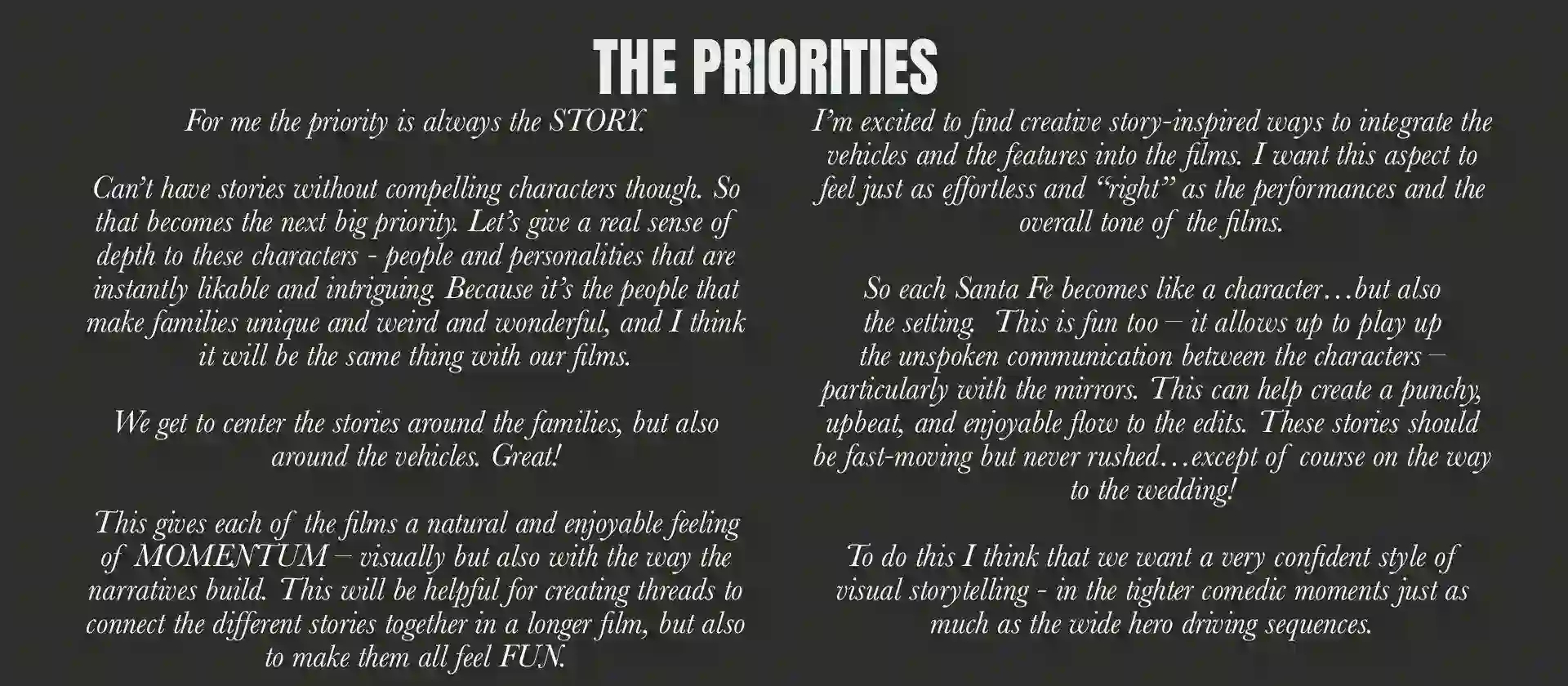

A well-crafted director’s treatment is a vital document in the film industry, playing a crucial role in winning pitches and securing projects. A director’s treatment sample provides a clear and concise creative approach, outlining the storyboards and writing that will be used by production companies. This document serves as a comprehensive guide that showcases the director’s art direction, understanding of film projects, and their creative vision. It provides insights into their approach, storyboards, and visual style. By effectively combining a creative approach and storytelling techniques with visually captivating elements, a director’s treatment has the potential to bring film projects and video projects to life on the page. This involves incorporating writing skills into the process.
Director's Treatment Samples: Mastering the Pitch




Hyundai Treatment
The Essence of a Director's Treatment Sample
Definition and Purpose
A director’s treatment is a blueprint that brings a creative vision to life in the video project production process. It serves as a guide for producers and production companies, outlining the visual style and overall direction of the project. It serves as a creative approach and communication tool for potential collaborators or clients, conveying ideas, style, tone, and commercial value of film projects through a keynote presentation.
Key Elements of a Successful Director’s Treatment Sample
An effective director’s treatment sample for a commercial film project comprises clear objectives, unique selling propositions, and understanding of the target audience’s ideas. In a video production, whether it’s a commercial or a film project, compelling storytelling, emotional engagement, and persuasive language techniques are crucial.
Role in Winning a Pitch
A well-crafted director’s treatment significantly impacts the success rates of a film project pitch by showcasing creativity, vision, and expertise to potential investors or clients in the production, commercial, and video industry. Tailoring production treatments to specific commercial pitching scenarios or decision-makers enhances their effectiveness for the client. By using a template, you can easily customize your approach and ensure that your pitch is targeted and impactful.
Crafting a Compelling Narrative
Storytelling Techniques
Exploring various storytelling techniques is an essential part of crafting a compelling narrative in a director’s treatment sample. Whether it’s for a commercial or a template, understanding the client’s needs and incorporating their vision is crucial. By employing narrative structures such as three acts or hero journeys, commercial filmmakers can create a cohesive and engaging story for their client pitch. Using a treatment template can help in organizing the ideas and presenting them effectively. Focusing on the development of engaging characters, conflict resolution, and thematic elements adds depth and resonance to the overall film narrative. This is especially important when creating a commercial or pitching a film. By using a treatment template, you can effectively structure your story and convey its key elements.
Visual Descriptions
In a film director’s treatment, visual descriptions and templates play a crucial role in conveying the intended look and feel of the commercial pitch. Using an effective template, describing locations, sets, costumes, props, and other visual elements is vital when pitching to clients. This ensures that readers can accurately visualize the filmmaker’s creative approach. Through vivid imagery created by descriptive language, filmmakers can transport readers into their envisioned world. This is especially important when pitching a client for a film project. Having a captivating pitch that effectively conveys the vision and tone of the film can greatly increase the chances of securing funding or support. To assist with this, filmmakers often use a pitch template to ensure they cover all the necessary elements and make a strong impression on the client.
Emotional Engagement
Evoking emotions through words and visuals is another key aspect of a successful film director’s treatment sample for a client. By using a universal template or pitch, filmmakers can connect with readers on an emotional level. This emotional engagement helps captivate the audience’s attention and makes them invest in the pitch being told. Including examples of emotional engagement in director’s treatments can inspire impactful narratives and enhance the pitch process.
Crafting a compelling narrative requires employing effective storytelling techniques, utilizing visual descriptions to convey the intended look and feel of the project accurately, and evoking emotions through words and visuals in director’s treatments. By mastering these aspects of storytelling, filmmakers can create captivating narratives that resonate with audiences.
Breaking Down the Structure of a Director’s Treatment Sample
Beginning with a Strong Opening
Capturing attention from the start of a director’s treatment is crucial. To achieve this, it’s important to craft compelling opening paragraphs or sections that immediately engage the reader. One effective strategy is to use vivid language or imagery that sets the tone for the rest of the treatment. For example, starting with an intriguing anecdote or posing a thought-provoking question can pique curiosity and draw readers in.
Developing the Core Content
The core content of a director’s treatment sample should be structured and developed in a coherent manner. Organizing ideas, themes, and plot points effectively ensures clarity and keeps readers engaged throughout. One method is to outline key scenes or sequences, arranging them in a logical order that aligns with the overall narrative arc. Incorporating visual references such as storyboards or concept art can help convey your vision more effectively.
Concluding with Impact
Leaving a lasting impression through an impactful conclusion is essential. A strong ending can summarize key points, reiterate unique selling propositions, or create cliffhangers that leave decision-makers wanting more. It’s important to tie together all elements discussed in the treatment while maintaining a sense of excitement and anticipation for what lies ahead. By crafting an impactful conclusion, you increase your chances of influencing decision-makers positively.
Integrating Visual Elements into Your Director’s Treatment Sample
Importance of Visuals in a Director’s Treatment Sample
Visuals play a crucial role in director’s treatments by enhancing storytelling and conveying visual style effectively. Images have the power to captivate an audience, making them an essential component of any treatment. By incorporating visuals, directors can create a more immersive experience for viewers.
Choosing the Right Images
When selecting images for director’s treatments, several considerations come into play. It is important to align chosen images with project objectives and target audience preferences. This ensures that the visuals resonate with the intended message and evoke the desired emotional response from viewers. By carefully curating images, directors can enhance the overall quality of their treatments.
Creating a Visual Flow
Maintaining visual coherence and flow throughout a director’s treatment sample is crucial for engaging the audience. Directors must strategically arrange images and text in an aesthetically pleasing manner to ensure readability and engagement. By creating a visually cohesive narrative, directors can guide viewers through their treatment seamlessly.
Incorporating visual elements into director’s treatments allows for better communication of ideas, enhances storytelling, and captures attention effectively. By choosing the right images that align with project objectives and target audience preferences, directors can elevate the overall quality of their treatments. Creating a visual flow ensures that viewers are engaged throughout the treatment journey.
Visuals are powerful tools that enable directors to express their creative vision clearly. When integrated thoughtfully and strategically, these elements can elevate director’s treatments to new heights.
Tailoring Content for Your Audience
Knowing Your Reader
Understanding your target audience is crucial when creating a director’s treatment sample. By researching their preferences, expectations, and industry standards, you can tailor your treatment to resonate with them. This research enables you to craft a treatment that aligns with their specific needs and desires, increasing the chances of capturing their attention. When you know who your readers are, you can effectively communicate the value and uniqueness of your project.
Addressing Expectations
Meeting or exceeding reader expectations in your director’s treatment is essential for its success. By anticipating potential concerns or questions and addressing them proactively, you can provide reassurance and build confidence in your project. Consider including relevant information that addresses any doubts or uncertainties the reader may have. By doing so, you demonstrate thoroughness and professionalism while instilling trust in your abilities.
Customizing the Tone and Style
Adapting the tone and style of your director’s treatment to suit different projects or clients is vital. Each project has its own unique requirements, and by customizing the language, visuals, and overall presentation accordingly, you enhance its effectiveness. Whether it’s a formal corporate pitch or a creative endeavor, tailoring the tone and style ensures that the treatment resonates with the intended audience. It allows you to connect on a deeper level with decision-makers and increase the likelihood of securing their support.
The Power of Persuasion in a Director’s Treatment Sample
Persuasive Language Techniques
Exploring persuasive language techniques that can be employed in director’s treatments. These techniques involve using specific methods to create compelling arguments, such as employing rhetorical devices or leveraging testimonials. By incorporating these techniques, a director’s treatment sample can effectively influence decision-makers. For example, utilizing emotional appeals or logical reasoning can sway the opinions of those in charge.
Creating a Unique Selling Proposition
Crafting a unique selling proposition is crucial for setting a director’s treatment apart from others. Narratives that work involve highlighting distinctive qualities, strengths, or innovative aspects of the project to captivate decision-makers’ attention. By showcasing what makes the treatment stand out, it becomes more appealing and memorable. Successful outcomes have been observed when strong unique selling propositions are presented.
Connecting with the Decision-Maker
Establishing a connection with decision-makers through director’s treatments plays a vital role in achieving favorable outcomes. Personalizing treatments by tailoring them to the specific interests and values of the decision-maker helps forge a connection. Showcasing shared values or demonstrating expertise in relevant areas can also strengthen this connection further. Examples abound where effective connections with decision-makers have resulted in positive decisions.
By implementing persuasive language techniques, creating unique selling propositions, and connecting with decision-makers on an emotional level, directors can enhance their chances of success when presenting their treatments. It is essential to understand how to craft compelling arguments that resonate with decision-makers’ needs and desires while highlighting what sets their treatment apart from others.
Templates and Director’s Treatment Sample to Guide You
Utilizing Templates Wisely
Templates can be valuable starting points for creating a director’s treatment sample, but it is essential to customize them for each project. By adapting templates while maintaining consistency and professionalism, filmmakers can ensure that their treatments accurately reflect their vision. For instance, modifying the structure, tone, or visual elements of a template can make it more tailored to the specific project. This customization process allows filmmakers to showcase their unique ideas and themes effectively. By utilizing templates smartly, directors can improve the overall quality of their treatments.
Analyzing Real-World Director’s Treatment Samples
Studying real-world examples is crucial for enhancing director’s treatment skills. Examining successful treatments from various genres or industries provides valuable insights into effective storytelling techniques and visual strategies. By analyzing these examples, filmmakers can learn from the best practices employed by experienced professionals. Identifying key takeaways and lessons learned helps directors refine their own approach in crafting compelling treatments that resonate with audiences. Real-world examples serve as invaluable sources of inspiration and guidance.
Learning from Industry Standards via a Director’s Treatment Sample
Understanding and adhering to industry standards play a significant role in creating credible director’s treatments. Familiarizing oneself with common practices, expectations, and trends within the film industry ensures that treatments align with professional norms. This knowledge enhances treatment credibility when presenting projects to potential collaborators or investors. By following industry standards, directors demonstrate their expertise and professionalism in delivering high-quality films.
Conclusion: Make Your Director’s Treatment Sample Great!
Crafting a compelling director’s treatment sample requires a combination of storytelling skills, structural understanding, and visual integration. By following the steps outlined in this article, you can create a treatment that effectively communicates your vision and persuades decision-makers to support your project. Remember to tailor your content for your specific audience, utilizing templates and examples as guides to help you along the way. Additionally, view other’s director’s treatment samples from our website:
Now armed with the knowledge and tools necessary, it’s time to put theory into practice. Start by analyzing successful treatments in your field, identifying what worked well and how you can incorporate those elements into your own work. Experiment with different narrative structures, visual techniques, and persuasive strategies to find the approach that best suits your project. With dedication and practice, you can become a master at crafting director’s treatments that captivate and convince.
FAQs for Director's Treatment Samples
What is a director’s treatment?
A director’s treatment is a document that outlines the creative vision and approach of a director for a film or video project. It includes details about the story, visual style, tone, and overall direction of the project.
Why is a director’s treatment important?
A director’s treatment serves as a blueprint for the project and helps communicate the director’s vision to producers, clients, and other stakeholders. It provides clarity on the creative direction and helps align everyone involved in bringing the project to life.
How long should a director’s treatment be?
The length of a director’s treatment can vary depending on the project and its complexity. Generally, treatments range from 2 to 10 pages. It should be concise yet comprehensive enough to convey all essential elements of the creative vision.
What should be included in a director’s treatment?
A director’s treatment typically includes an overview of the story or concept, character descriptions, visual references or mood boards, proposed shooting techniques or styles, and any other relevant details that help capture the intended look and feel of the project.
Who writes a director’s treatment?
The director or someone working closely with them usually writes the director’s treatment. They are responsible for translating their creative vision into written form while ensuring it effectively communicates their ideas to others involved in the production process.