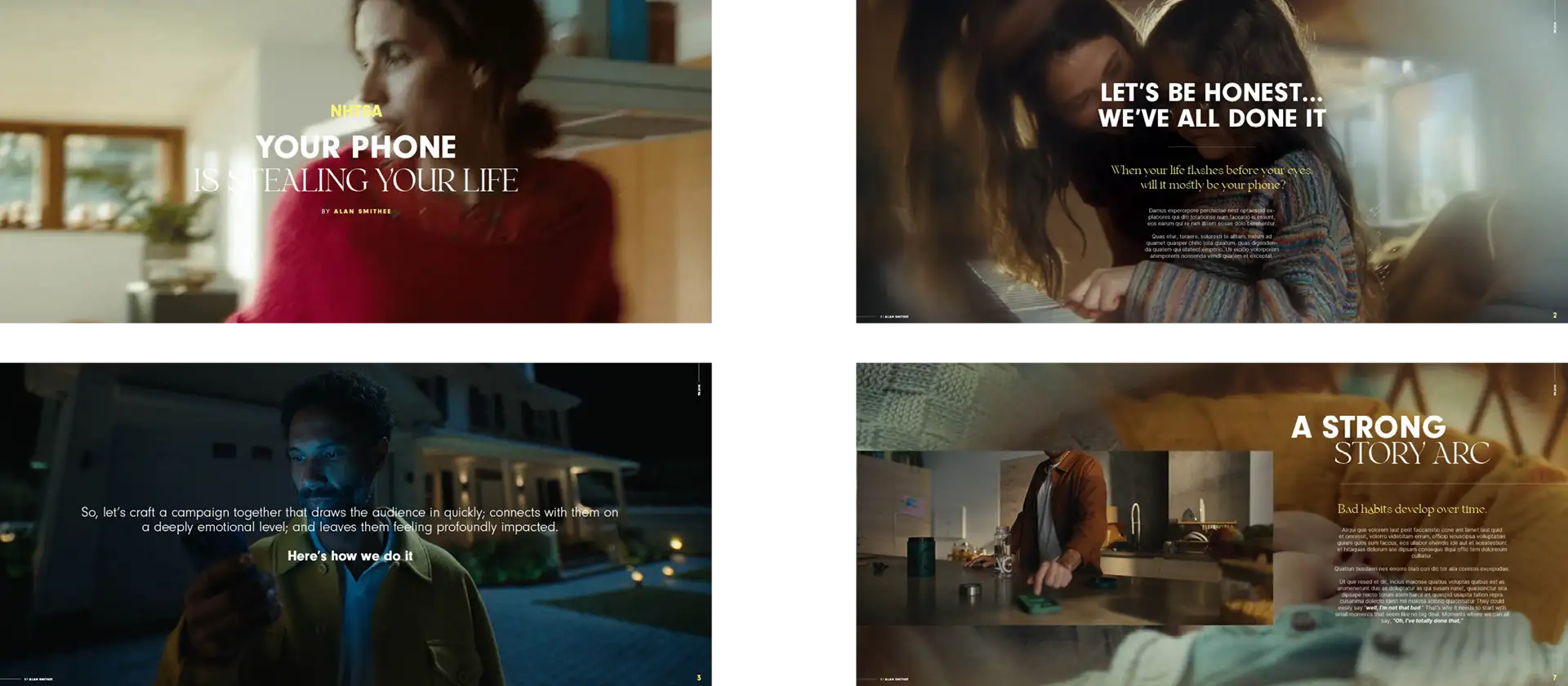
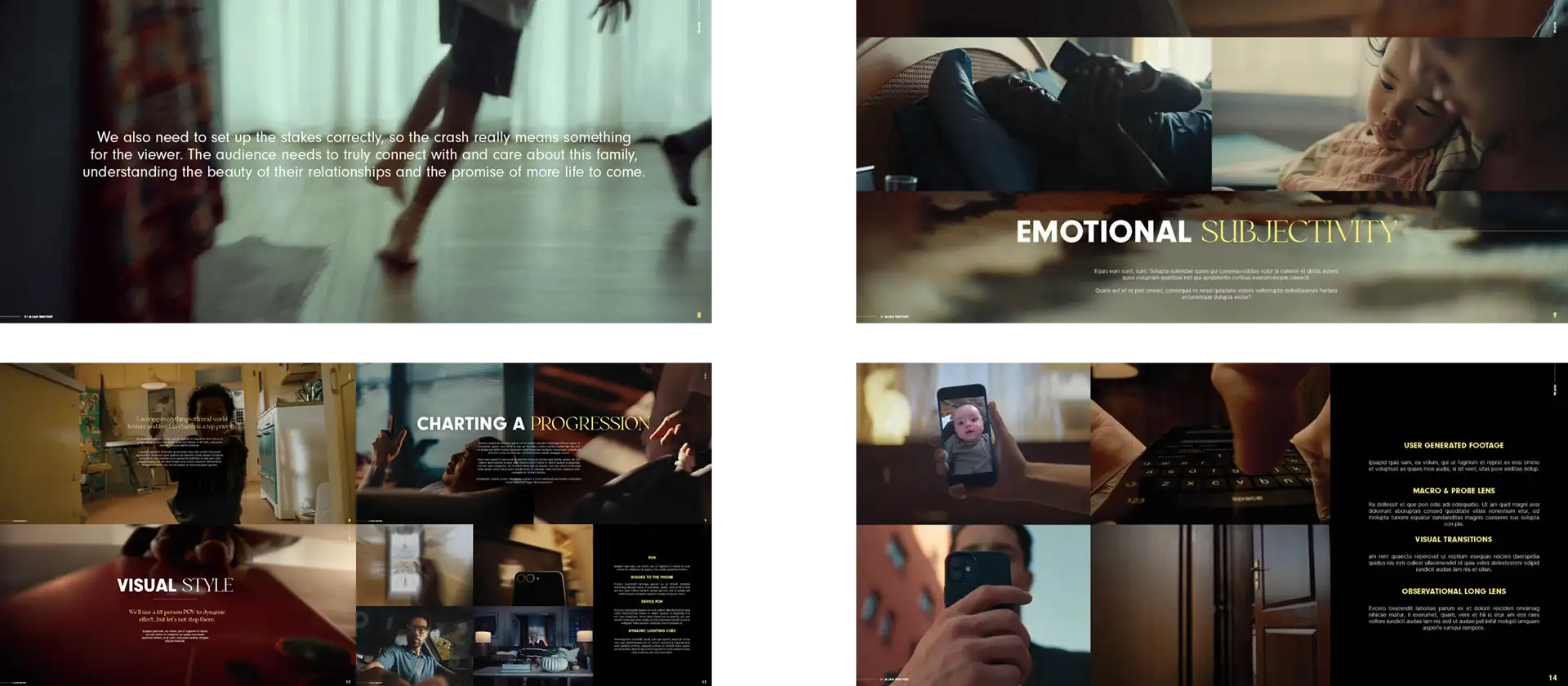
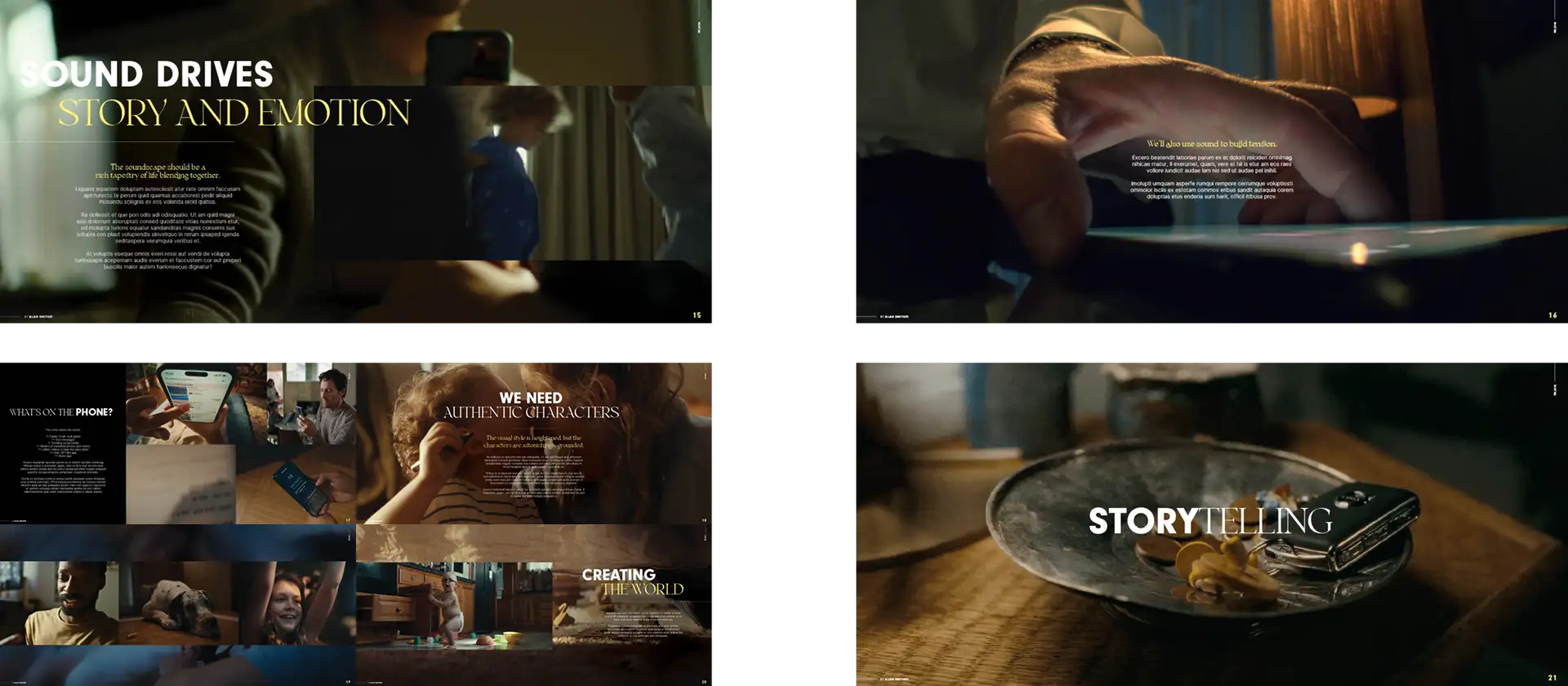
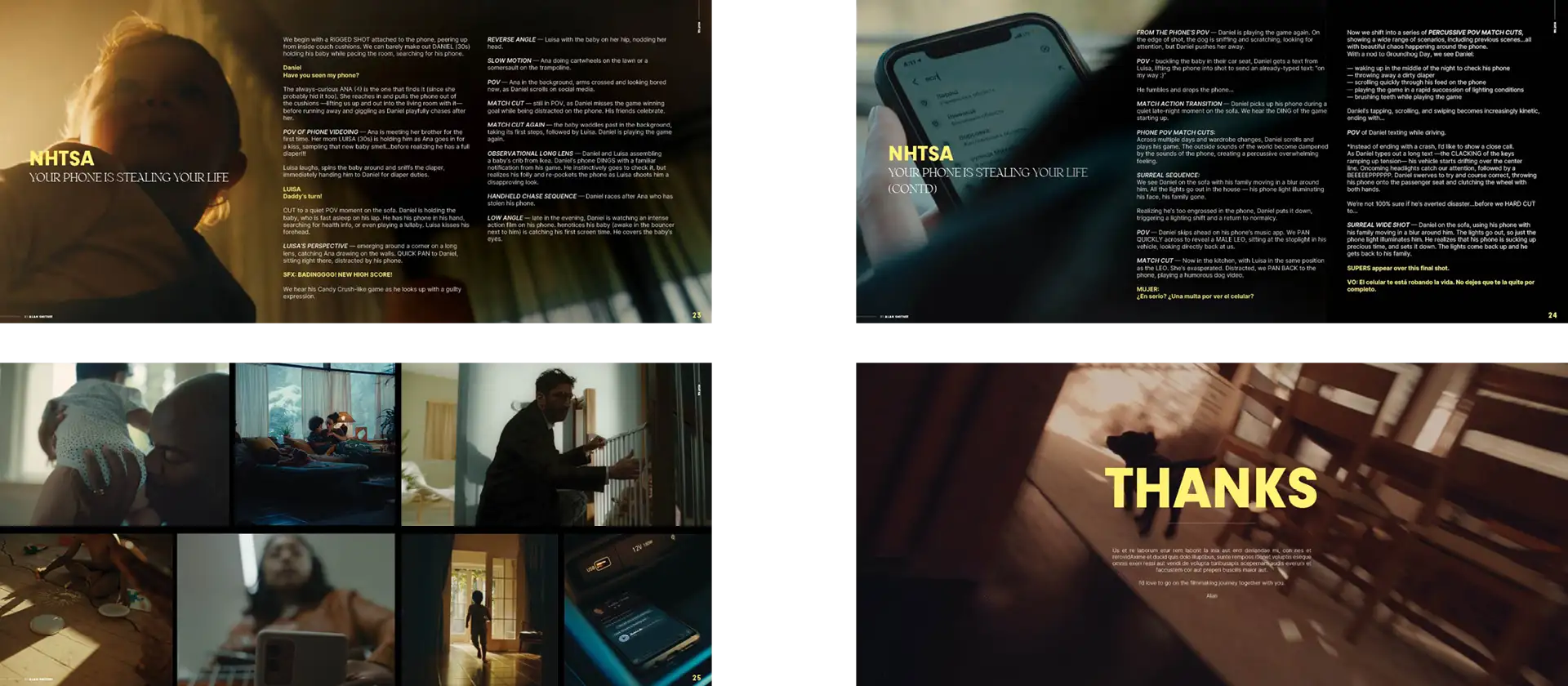
- Define your central theme or emotional punch of the film early in your short film treatment example.
- Organize the film treatment template into fundamental components including title, logline, synopsis, characters, and vision. Make certain that each segment fulfills a distinct storytelling and cinematic function.
- Write original, memorable, and concise titles and loglines. They set the mood and stir interest from collaborators and investors.
- Humanize your characters: Create quick but thorough character sheets with motivations and arcs to bring depth to your story.
- Visual and sound elements wise, still employ storyboards, color palettes, and detailed sound plans to maximize your storytelling and desired emotional effects.
- Use the film treatment as a ‘living document’ that grows with feedback and revision. It serves as a working tool for both creative and production minds.
The Treatment’s Soul: Short Film Treatment Example
Wondering how to create treatment screenplay example? A good short film treatment example strikes mood and purpose for a short film. It establishes the true soul of the tale, ensuring the movie has a firm center and resonates across audiences from all walks. The best treatments demonstrate what the story is, why it is important and how it is emotional. They keep the plot basic, a single key idea, so that the audience can relate to it regardless of their background or experience.
The treatment’s soul lies in the emotional residue the story wants to imprint. For instance, a short film on loss and acceptance might employ minimal dialogue and gentle lighting to draw out subtle melancholy. A little thing, such as a character folding a shirt, can reveal huge emotions without dialogue. Movies that want to evoke hope or courage might employ brighter colors or quicker edits.
In a tale of bravery in the face of hardship, rapid cuts and strident music can help create urgency and compel us to cheer on the protagonist. When a movie addresses social issues, the treatment can be more about shots of crowds, signs, or faces to create empathy and motivation to make a difference.
The Heart of the Matter
The heart of the matter is what connects every element of the sizzle reel. Every scene, every line, every shot should relate back to this core idea. For example, a coming-of-age film would show small victories and failures that influence the protagonist’s developing identity. If it’s a story about identity and belonging, your short film treatment example might have wide shots of your protagonist solitary in expansive rooms, then close-ups in cozy, crowded environments as it approaches the ending.
The theme should inform the decisions you make regarding music, style, and even camera movement. Clarity and focus were the name of the game. The treatment should describe not just what happens, but why each moment is significant. It should avoid side plots or too many characters, making the story tight and easy to follow.
This assists the film’s thesis in resonating across a global audience, regardless of age or experience.
|
Theme
|
Emotional Impact
|
Narrative Style
|
|
Loss and acceptance
|
Quiet grief, slow healing
|
Linear, restrained
|
|
Courage in adversity
|
Tension, resolve
|
Non-linear, flashback
|
|
Coming of age
|
Hope, uncertainty, pride
|
First-person voice
|
|
Social injustice
|
Outrage, empathy, resolve
|
Montage, voice-over
|
|
Identity and belonging
|
Longing, comfort, self-worth
|
Minimalist, visual
|
Anatomy of an Example: Short Film treatment Example
A sharp short film treatment example gets your story across with ease, guides production planning, and attracts readers or backers. Each element of the treatment coalesces so the end result narrates a compelling, complete story very succinctly.
The summary below dissects every essential component and how it integrates into the entire treatment, accompanied by illustrations and a checklist to maintain your treatment on course.
1. The Title
In an example movie treatment a good title conveys to the audience some of the feeling of the movie. Silent Crossings” evokes a somber, suspenseful passage, whereas “Daylight Echoes” could imply optimism or reminiscence.
A good title is brief, catchy, and memorable. Don’t use names that remind you of other movies or that are stale words. Query friends or colleagues. Do they recall it a day later? If not, rethink.
2. The Logline
The logline is a quick pitch: one or two sentences, tops. It introduces the protagonist, his or her objective, and the central difficulty.
Example: “A shy teen must cross a war zone to bring her brother home.” This says who, what, and why it’s important. Keep it tight. Don’t throw in subplots or secondary characters. Rewrite it until you can say it out loud without fumbling.
3. The Synopsis
Your synopsis needs to provide the thrust of the plot, the plot twists, and the climax, all in a couple of paragraphs. Narrate the action but keep it moving—don’t get lost in minutia.
Start with how the main character begins the journey, what changes them along the way, and how the story ends. Include a twist or major decision if it defines the story. Cut any details that bog things down or restate what’s obvious.
4. The Characters
Identify the lead actors and what distinguishes them. Mina, 17, sharp but secretive, adores her little brother. Demonstrate how characters relate.
One is a mentor and the other is a rival. Keep the emphasis on how their arcs connect to the story’s theme. Give each a motivation for their selections by alluding to their background or anxieties, but don’t fill in full bios.
5. The Vision
Describe how the film ought to feel and look. ‘Muted colors, long takes, quiet sound design’ gives you that drab mood. For instance, if you desire quick cuts or hanging shots.
Reference movies, art, or styles that influence you. If the story is about optimism, demonstrate how the imagery or soundtrack will support that. Ensure each decision relates to the heart of the story and the characters.
Checklist: Compelling title, tight logline, clear synopsis, strong characters, defined vision.
Crafting Your Narrative: Short Film Treatment Example
A good short film treatment example should have a definite story arc so that the reader can see the film in his mind before it is created. Your organization will take your audience on that journey with you, providing a natural progression from beginning to end. Start by sketching out the major sections: intro, development, climax, resolution.
Each part serves a purpose: drawing the viewer in, deepening the conflict, and offering closure. For example, a treatment for a five-minute drama about a lost child might divide these elements into a quick morning routine, an abrupt disappearance in a chaotic park, a desperate search, and an ultimate reunion. This sequential outline keeps the story on track and digestible.
Make It Compelling
You need a compelling lede to capture notice and provide context. Your opening paragraph or lines have to establish tone, introduce the protagonist, and tease the stakes. For instance, noting a busy city as the setting and a girl holding a torn teddy bear immediately provides the reader with setting and an emotional inroad.
This trick works across genres. Checkout treatment examples TV and film we have. Whether your film is based in a remote mountain village or a contemporary city square, your opening lines need to paint a scene that readers can immediately latch onto. Keep details tight. A line or two about weather or mood can ground the world without bogging the momentum.
Create Tension
Creating tension is illustrating the obstacles confronting the protagonist. These challenges could be tangible, such as a closed gate or skipped bus, or intangible, such as skepticism or apprehension. Good treatments employ quick, incisive moves to advance the plot.
If the kid loses sight of their mom, therapy should be based on how to respond. Do you freeze, scream, or hunt down the crowd? The more specific the answer, the more the reader identifies with the hero. Easy triggers, such as the wail of a far-off siren or the glare of streetlights, complicate matters with additional stress. No complex history is needed.
Strong Summary or Conclusion
A good conclusion is a must. The resolution has to wrap up the central story and resonate with the picture’s larger themes. In the lost child case, the reunion might be without words, just an embrace and the retrieval of the teddy bear.
This moment should reorient toward the story’s theme of safety, warmth, and optimism. Don’t tack on a new twist here. Leave the final images or actions with the audience. It’s memorable; it’s closure for the treatment.
Beyond the Page
A short film treatment example is more than just plot and dialogue on paper. To make a film pop, your treatment should provide explicit direction for imagery, sound design, and tone. These details contribute to creating an emotional experience for the audience and connect them with the story, making the concepts come alive in a visceral way.
Below, we decompose each of these to help creators understand how these different pieces unite to enrich the film’s effect.
Visuals
- Employ echoic visuals, such as a shattered watch or urban lights, to suggest the progression of time or disorientation.
- Select a blue-gray palette for a pensive air. Use vividly colored, oversaturated tones for happiness or optimism.
- Use tight close ups in tense scenes to build intimacy. Use wide shots to depict solitude or separateness. Use a handheld camera for added urgency.
- Construct a rough storyboard with sketches or photo references from public image libraries.
Key motifs such as shadows in doorways or the repeated image of water can resonate with the film’s main conflict or themes like secrecy or transformation. Visual references, even basic ones, keep the director and crew aligned on the same vision.
Sound
|
Sound Element
|
Purpose
|
Impact
|
|
Ambient noise
|
Sets the location, grounds scenes
|
Immerses the viewer
|
|
Silence
|
Marks tension, signals change
|
Heightens anticipation
|
|
Dialogue clarity
|
Delivers story, builds character
|
Ensures understanding
|
|
Music
|
Supports mood, cues emotion
|
Intensifies feeling
|
|
Sound effects
|
Builds world, adds realism
|
Deepens atmosphere
|
Schedule scenes where silence is equally significant as noise, such as a hush before a disclosure or a lack of urban roar indicating solitude. Add atmosphere with sound effects, such as footsteps or rain. Select music that corresponds to the feeling, like slow piano when experiencing tragedy or marching drums when expressing optimism.
Tone
Decide if your movie wants to be funny, thought provoking or suspenseful. If it’s a story of loss, keep words and scene minimal and crude. For comedy, use snappy, light phrasing.
Maintain the style—don’t allow any one dramatic scene to rupture the airy tone unless it is a deliberate transition. Tone affects the audience’s perception of the movie and their emotional involvement with the characters.
Common Pitfalls
Short film treatments tend to fall into traps that weaken the final product and drag out production. Identifying these mistakes enables writers to create lucid, compelling, and universal treatments that address an international audience and serve the film’s mission.
Keep It Concise
A short film treatment example has to be concise. Overly complicated plots can detract from the narrative. When a short film attempts to explore too many concepts or storylines, audiences can become disoriented. For instance, a five-minute film about a childhood memory does not need to develop side characters or multiple subplots.
Even if you don’t believe it, it’s easier to keep the core theme and story arc tight so both creative teams and audiences can follow the journey. Treatments are most effective when they present a single narrative with a beginning, middle, and end that aligns with the movie’s primary theme.
Character Development
One thing frequently forgotten in short film treatments is character development. Even with a small amount of screen time, every lead must have driving motivation and a clear voice. The tale of a busker is more interesting when the treatment explores why the character makes music and what they aspire to.
Stay away from characters who are there simply to push the plot or who are just present. Little things, such as a small action or a line in the treatment, can disclose a lot about personality and intent. For example, recording the way a character responds to failure imparts dimension and connection.
These rich character notes assist actors, directors, and designers in bringing the story to life in an honest and true feeling way. Jargon is another pitfall. Treatments littered with technical film jargon or insider language run the risk of alienating a non-expert reader.
Make It Readable
Terms such as “diegetic sound” or “montage sequence” can be sprinkled around with caution and clarified when necessary. The key is to write your treatment so that it is readable by producers, collaborators, and even outsiders. Plain-English thinking ensures that more people can comprehend the vision and provide input or assistance.
When in doubt, just describe activity and scene—‘the music plays from a radio on the table’ versus using esoteric terminology.
Do’s and Don’ts in Short Film Treatment Writing:
- Do keep the story focused and straightforward.
- Do develop main characters with clear goals and traits.
- Do use language that is straightforward and easy to understand for everyone.
- Don’t introduce too many subplots or side themes.
- Don’t let characters remain flat or one-dimensional.
- Don’t stuff the short film treatment example with unexplained technical or film terms.
The Evolving Document
A short film treatment is not a draft. It’s a living document that evolves. Writers and directors typically begin with a rough outline, yet every component—from synopses to character sketches—is fluid as the crew discovers more about the narrative or receives fresh insights from collaborators.
A treatment won’t appear the same at the end of the process as it did in the beginning. For instance, an early draft might present a straightforward narrative about a missing object, but with input, it can evolve into an exploration of themes such as reminiscence or separation, introducing new scenes or altering the mood. This expansion is not merely typical—it is the key to creating a movie that satisfies both the filmmakers and the viewer.
Be Open to Feedback
Openness to feedback is one of the most valuable things you can do to help shape a good treatment. Film work is nearly always a collaborative effort, and everyone—from producers to camera crew—might notice something that the writer didn’t. When a reader comments that a scene drags or a character’s objective is vague, it’s wise to review those remarks carefully.
Altering a paragraph because it’s clearer or more impactful doesn’t imply relinquishing control; it means crafting a more solid foundation for the movie. For example, a scene that reads slowly on paper has to be cut or replaced with a faster one, or a line of dialogue changed to local speech if they’re moving the film to a new location. These sorts of transformations are typical and demonstrate the power of communal wisdom.
Tracking Notes
Tracking change is as important as making it. Writers should maintain notes on why they move plot points, insert scenes, or trim dialogue. This running documentation helps identify what, when, and what not, and it illustrates the evolution of creativity. Easy things like a datestamp in your file or tracked edits in your film treatment examples PDF document.
This journal facilitates retrospective examination of the route from initial manuscript to polished piece. For instance, if a story was initially based in a city and then shifted to a small town, the notes will indicate when and why the decision was made, assisting in keeping everyone on the same page.
Make it Matter
Your treatment is more than just a summary of your script. It serves as a guide for the entire team. Directors consult it to stage shots and tone, while crew periodically reviews it to prepare lights, audio, or props.
When shooting, if an issue arises, such as an important location being unavailable or an actor being ill, the short film treatment example can assist in deciding what to modify or retain. Since it is transparent and current, the team has confidence in it when they make rapid decisions. This turns the short film treatment example into more than simply a plan. It becomes a document that informs every stage of production.
Conclusion: Short Film Treatment Example
Short film treatments bare the bones of a story, clear scenes, sharp beats, strong voice. Screenwriters use these to communicate concepts and create an actual atmosphere. Treatments stick close to the spine of the plot, trim the fat, and provide just enough detail for groups to keep track. A lot of us skip building a full script and start with treatments to test what works. Great ones allude to tone, style and flow with terse words and bold lines. Filmmakers, new or pro, use them to pitch, plan, and steer work. Make something like a live-action or animated treatment for your next film idea. See your story grow on the page and strengthen with every draft.
What is a short film treatment?
About short film treatment example It describes the story, principal characters, and major themes, assisting others to quickly grasp your concept.
How long should a short film treatment be?
A typical short film treatment is between one and two pages in length. They ought to be succinct, emphasizing the primary plot points and emotional timbre.
Why is a treatment important before making a short film?
A treatment helps crystallize your plot and vision. It directs the artistry and facilitates communicating your vision to collaborators and investors.
What should be included in a short film treatment example?
- Title:
- Logline:
- Main Characters:
- Plot Summary:
- Theme:
Use simple, attention-grabbing language.
Can a short film treatment change during production?
No, treatments can change as you make progress. Updates can result from new thoughts, input, or story shifts.
What are common mistakes when writing a short film treatment?
Typical errors are being too broad, too specific, or unfocused. Avoid jargon and make the treatment compelling and accessible.
Who reads a short film treatment?
Directors, producers, investors, and team members read treatments and help them get the story and get involved.