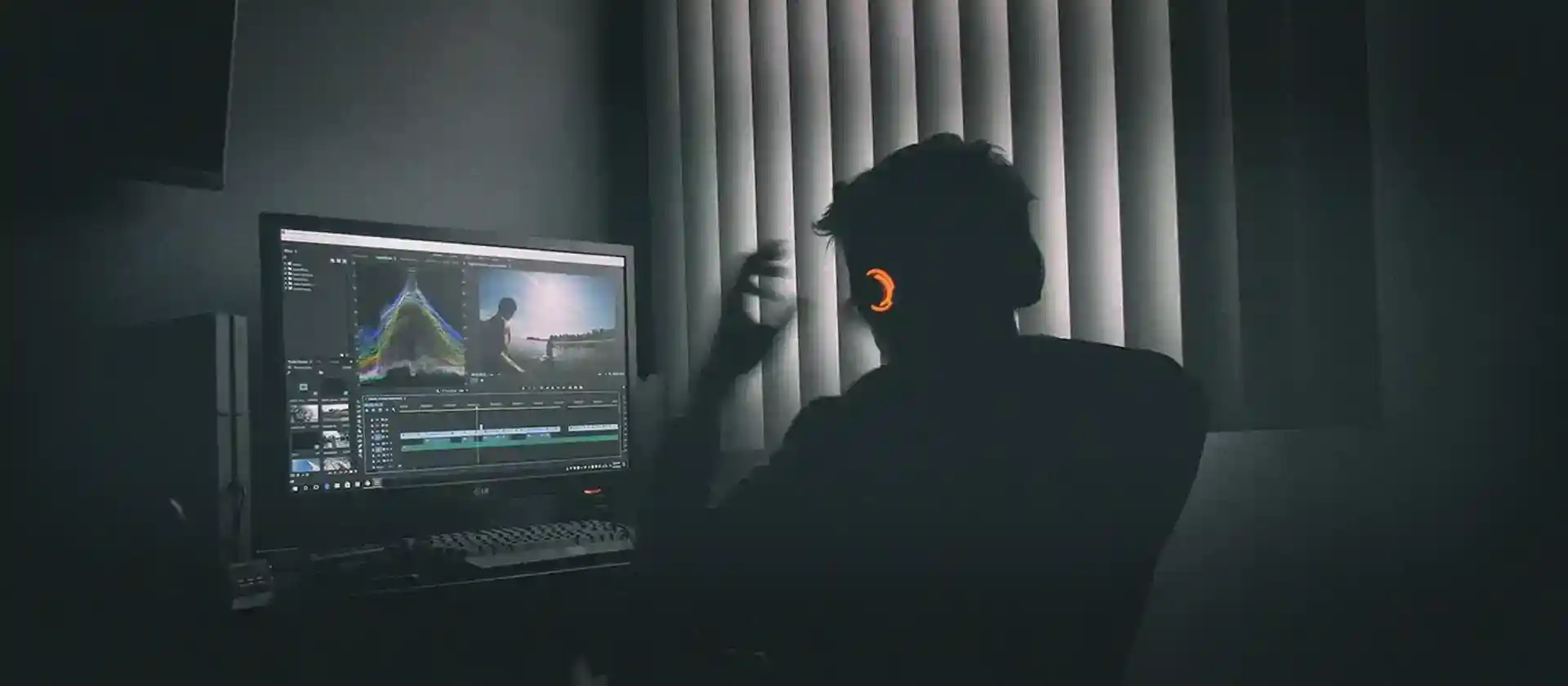

In addition to editing films and being a trailblazing sound designer, Walter Murch developed a theory of editing that can be amazingly useful. One of the most thought-provoking principles explored in his book In the Blink of an Eye: A Perspective on Film Editing is ‘the rule of six’.
In this article we’ll be exploring:
Walter Murch's Rule of 6:
Simply put, Murch believes there are six elements that work to make a cut as strong as possible. Ideally, your edits have all six, although don’t be worried if they don’t.
1. Emotion
In terms of editing films, this means clearly knowing what the tone and the emotional intention of the shot, the scene, and the larger narrative are trying to say to the audience. Letting the emotional thrust of the story guide you should be the #1 priority.
You have to keep your fingers on that emotional pulse, as an editor. And really…never let it go.
— Walter Murch
If you aren’t sure what the emotional heart of a scene is, it may be why the edit isn’t working. So, take some time to figure it out, and you just might find that the cut becomes self-evident. There’s a reason why Murch put this element at the top of the list. Without it, all the other rules become a little irrelevant.
2. Story
Does the edit advance the story? The best ones do. But…bear in mind, that doesn’t mean the story needs to be told in a particularly linear way. When editing films, often by fragmenting the narrative flow, the cuts can bring a lot more depth and nuance to the story. The distinction here is between story and plot. Think of story as being what the film is about, not simply the things that happen.
3. Rhythm
Editing films is a visual art, but it’s also closely connected to music. You see, Murch wasn’t just an editor. He has the unique distinction of being the only person to win Oscars for both sound mixing and film editing. He also coined that beautiful term ‘worldizing’.
I was greatly influenced by musique concrete when I was, like, 10. I was completely mesmerized by the idea that you could make music out of sounds. So that’s been a constant influence on all my work.
— Walter Murch
Pay attention to the way a cut adds to (or distracts from) the accrued rhythm of a scene. Does it help the flow? Is it there to punctuate a sudden shift in tone? There’s a reason this element is third on Walter’s list.
4. Eye Trace
When you are editing films, think about where the audience is most likely to be looking during the first shot. Then, think about where their eye will be drawn to on the next one. Do you want this shift to be smooth or abrupt? Both can be effective, depending on the effect you are after. This concept can be particularly effective when it comes to using match cuts. This is something that directors and DPs should have at the front of their minds as they shoot coverage for a scene.
My job as an editor is to gently prod the attention of the audience to look at various parts of the frame. And that – I do that by manipulating how and where I cut and what succession of images I work with.
— Walter Murch
5. 2D Plane of the Screen
Whether respecting the 180-degree rule, or purposefully breaking it, directors, editors, and cinematographers need to know how visual continuity works. Likewise, it’s important to have a strong working knowledge of how eyelines work. It’s also worth noting that today’s filmmaking tools allow for a much more nimble and mobile style of camera movement. It’s possible to break the 180-degree simply by moving the camera across the ‘line’ thereby establishing a new 180-degree axis.
6. 3D Space
BREAKING THE RULE
But of course, when editing films, every rule is there to be broken. Particularly if it serves to accentuate the emotion or advance the story. Looking back at early cinema, you see this ‘respect’ for 3D space being taken to the extreme. It now seems incredibly tedious watching a character walk across a scene, just so the audience doesn’t get confused. These days though, audiences are savvy, and filmmakers know how to use editing to compress a lot of action into a scene.
The Importance of Editing in Films and TV
Editing is a crucial part of the filmmaking process. An implicit understanding of how a story can be elevated through editing is one of the most valuable skills a filmmaker can have in their toolkit. Many directors will tell you that the edit is the final draft of the screenplay. It’s no accident that many of the best directors start out toiling away editing films.
The film is made in the editing room. The shooting of the film is about shopping, almost. It’s like going to get all the ingredients together, and you’ve got to make sure before you leave the store that you got all the ingredients. And then you take those ingredients, and you can make a good cake – or not.
— Philip Seymour Hoffman

A Little
History
BackGround
Context
of Film Editing
Editing wasn’t a vital component in early cinema. The first films consisted mainly of static single-take sequences, not too different from the way a simple theatre show is presented. It wasn’t until the late 1890s that films began to splice multiple shots together in continuity.
However, a few decades later, Russian filmmaker Lev Kuleshov created a short film that demonstrated the power of montage. He then realized audiences find more meaning from the interaction of two sequential shots than from a single shot in isolation.
Post-Modern Cinema
Now, more than a century later, editing films has become a sophisticated artform. Gone are the days of painstakingly splicing celluloid together. Non-linear editing systems like Avid, Final Cut, and Premiere allow filmmakers an astounding amount of creative freedom.
After all, while visual effects wizardry has been part of cinema since the start, with the introduction of digital tools has changed the game immensely. This has been democratized filmmaking to the point where we can quickly make mini-epics with explosions and flashy transitions, right there on our phones.
But…the principles remain constant. Along the way, multiple rules and best practices have been established. These also include the 180-degree rule and the 30-degree rule and the don’t f*rt in the edit suite rule!